Java GC小结

1 JVM Generations
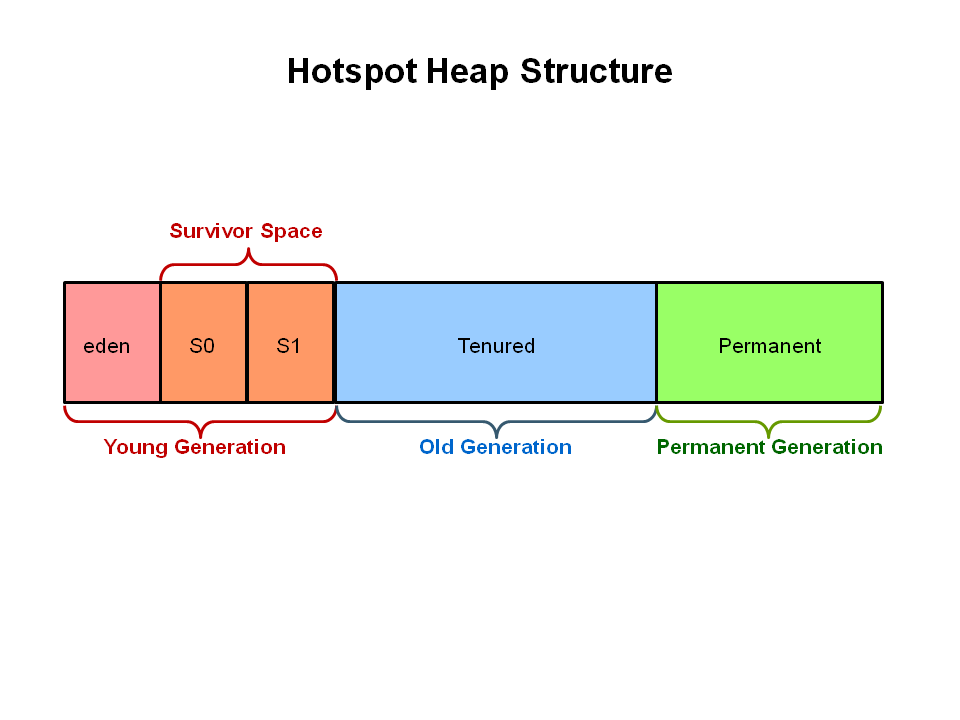
Java的堆被划分成不同的区域:
- young generation:存放新创建的对象,当这个区域占满的时候,会触发minor GC,这时候存活的对象会被标记年龄,最终会移动到old generation。
- old generation:存放存活的比较久的对象。当yound generation存活的对象年龄到达设置的阈值后,就会被移动到这里来。当这个区域满了的时候,会触发major GC。
- permanent generation:存放一些JVM运行所需的元数据,例如类的信息等。full GC的时候也包括对这个区域的GC。 其中,minor GC和major GC都是Stop the World的,即当GC触发的时候,所有的程序线程都会停止等待GC完成。通常minor GC会比major GC快很多,因为major GC会遍历所有的存活对象。
其中,yound generation 又被划分成Eden space, Survivor Space1, Survivor Space2,其中Eden Space占了绝大部分的空间。当Eden space满的时候,GC 会将存活对象移动到其中一个Survivor Space中,两个Survivor Space是为了避免内存碎片,每次将存活的对象(Eden Space以及上一个Survivor Space)移动到另一个Survivor Space中。
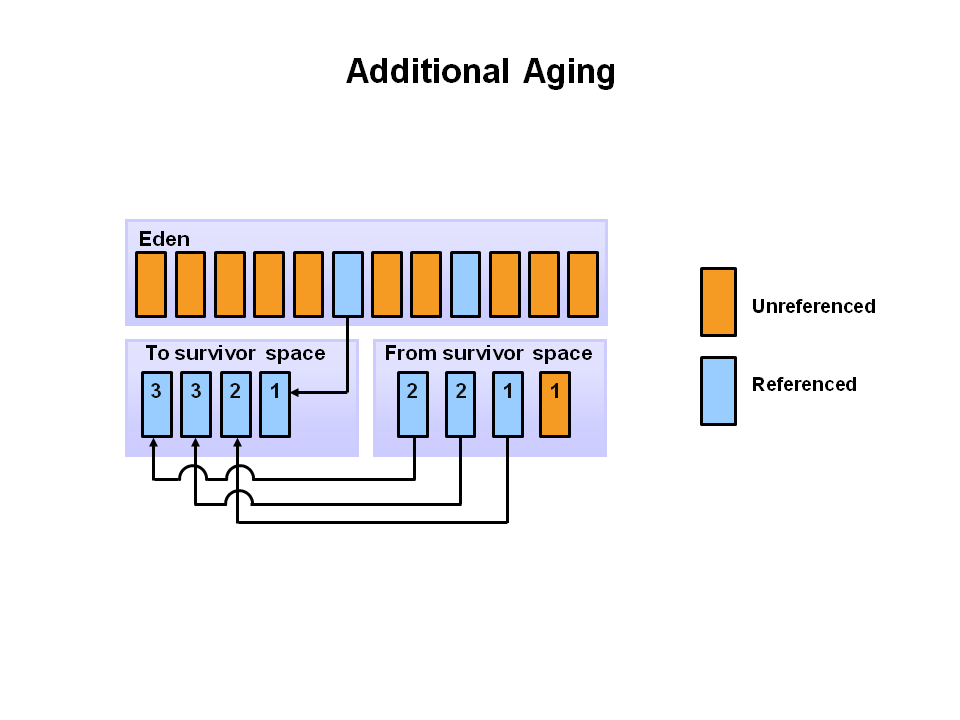
通过Java VisualVM和VisualGC插件可以很直观的看到GC的过程: 
java -Xmx50m \
-XX:-PrintGC \
-XX:+PrintHeapAtGC \
-XX:MaxTenuringThreshold=10 \
-XX:+UseConcMarkSweepGC \
-XX:+UseParNewGC TestGC
2 Garbage Collectors
| Argument | Description |
|---|---|
| -Xms | Sets the initial heap size for when the JVM starts. |
| -Xmx | Sets the maximum heap size. |
| -Xmn | Sets the size of the Young Generation. |
| -XX:PermSize | Sets the starting size of the Permanent Generation. |
| -XX:MaxPermSize | Sets the maximum size of the Permanent Generation |
- Serial GC:使用mark-compact算法进行GC,单线程的进行GC,适合单核CPU和在客户端允许的Java程序。
- Parallel GC(throughput collector):多线程进行GC
- Concurrent Mark Sweep (CMS) Collector: 在程序运行的时候并发的进行GC,以最大限度减少停止时间
- G1(Garbage-First) Garbage Collector: CMS的替代品
其中存在并行(Parallel)和并发(Concurrent)的区别,并行是指垃圾收集器多个线程同时工作,但此时用户线程依然是停止等待的;而并发是指在用户线程工作的同时,垃圾收集器同时执行。

| Garbage Collector | Type | Algorithm | MultiThread |
|---|---|---|---|
| Serial | stop-the-world | copying | No |
| ParNew | stop-the-world | copying | Yes |
| Parallel Scavenge | stop-the-world | copying | Yes |
| Serial Old | stop-the-world | mark-sweep-compact | No |
| CMS | low-pause | concurrent-mark-sweep | Yes |
| Parallel Old | stop-the-world | mark-sweep-compact | Yes |
| G1 | compacting | Yes |
| Arguments | Result |
|---|---|
| -XX:+UseSerialGC | Serial + Serial Old |
| -XX:+UseParNewGC | ParNew + Serial Old |
| -XX:+UseConcMarkSweepGC | ParNew + CMS + Serial Old1 |
| -XX:+UseParallelGC | Parallel Scavenge + Serial Old |
| -XX:+UseParallelOldGC | Parallel Scavenge + Parallel Old |
| –XX:+UseG1GC | G1 |
3 GC过程
3.1 CMS
CMS 收集器的步骤:
| Phase | Description |
|---|---|
| Initial Mark (Stop-Word) | 标记老年代中的对象是否可达(reachable),包括可以从新生代中到达的 |
| Concurrent Marking | |
| Remark (Stop-Word) | |
| Concurrent Sweep | |
| Resetting |
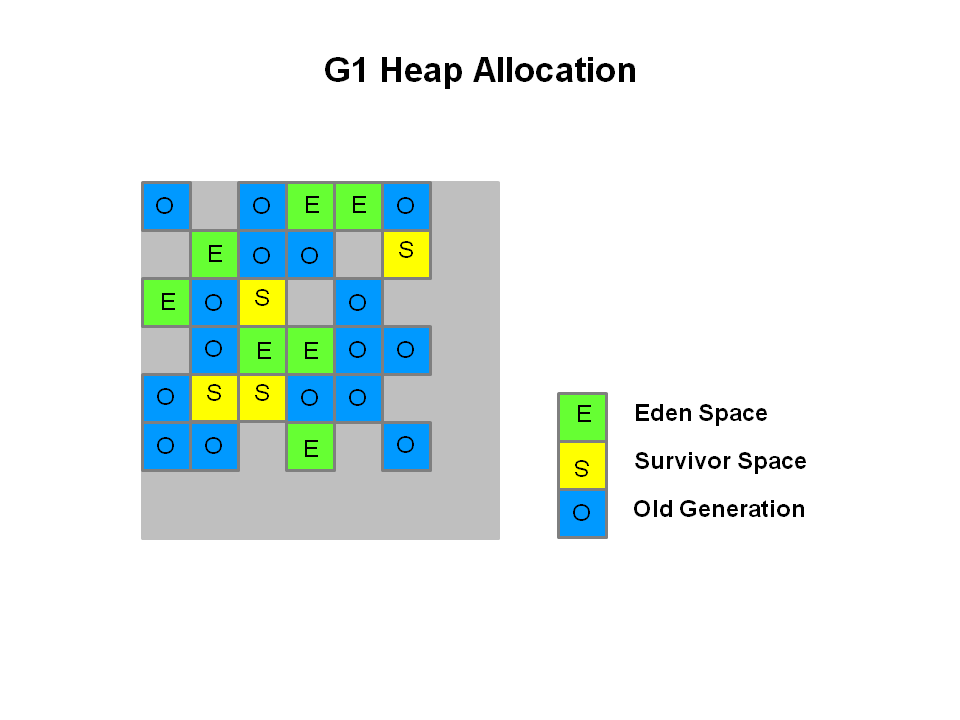
G1将Heap划分成一些相同大小的区块,但是没有限制不同代的大小。
References:
- Advanced Java
- Basics of Java Garbage Collection
- G1 in Action: Is it better than the CMS?
- Java Garbage Collection Basics
- Getting Started with the G1 Garbage Collector
“CMS” is used most of the time to collect the tenured generation. “Serial Old” is used when a concurrent mode failure occurs.↩︎